Saigon. Shit, still only Saigon.
So that's it: the last Commodore has left the plant. Elvis has left the building. The Australian car industry is now history, past tense, existing only on the pages of the car rags and the memories of those who were there. I thought I'd mark the occasion, and round out the year, by listing some of the cars made locally that I'd buy with my own money if opportunity knocked. Yes really, I mean everything I'm about to say, and I don't mean in the silly money-no-object way of pub arguments either, the kind of thing that ends with dreaming about parking your McLaren F1 next to your Chrysler ME Four-Twelve and taking the kids to school in your Cadillac Sixteen instead. I genuinely mean if I ever have the modest budget and the right one came along, I'd genuinely have one each of these... just, not all at the same time, probably.
Three Aussie Fords I'd Have...
1964 XM Futura Hardtop
Yes, a Falcon from the bad old days, before Broadmeadows got it right and built a Falcon we actually wanted to buy. A Falcon from the era of ball-joint failures and cracked suspension towers. A Falcon with the world's slowest steering ratio, five-and-a-half turns lock-to-lock. A Falcon with, at most, a 200ci "Super Pursuit" engine with 90 kW, capable of lurching from 0-100 in a dizzying 16.1 seconds and on to a top speed of just 152km/h. Why on God's green earth would anyone want to spend their hard-earned on such a machine?
Because of God's green earth, friend.
Think about it: how often do you redline your own car, truly? Have you ever? Or do you drive it gently and keep the bills from both the petrol station and the mechanic alike down to an absolute minimum? Yes exactly, so now imagine how you'd drive a car you dearly love and that's sixty years old, with spares ranging from critically endangered to nonexistent? Yes indeed. Realistically, the only way you can drive a classic car is slowly, so why not buy one you can enjoy by going slow?
That's where the XM Hardtop shines. It was Ford Australia's first attempt at a two-door Falcon – rarely a successful experiment in this country – and a sign of their desperation, as they sought to offer something you couldn't get from Holden. Hence the Hardtop: mechanically it was madness, as they were busy fitting strengthening beams from the American-market convertible to try and make the basic platform strong enough for our rough roads. Choosing that moment to rip off the roof structure and replace it with something only good for keeping the rain out was downright reckless. Yet thanks to that pillarless design all four windows could be made to disappear entirely, allowing the breeze to waft across those bench seats. Trust me, on a winding mountain road, on a glorious spring or autumn day, in area that has a very similar climate to central Italy, that's going to feel pretty good. Especially if there's a picnic hamper of lambrusco in the back, and someone with a wonderful personality in the passenger seat.
So why the luxury Futura? Partly just because it's the top-shelf version, which you want, but also because it's a hilarious reminder of how clueless Broadmeadows was in those days. There are times when the early Falcons really give away that they were designed for Chicago playboys, and the Futura's red vinyl interior rather rams it home. It's a time capsule, a moment so daft you have to love it. And yes, long trips would be dicey given that, like a Southern belle, it's prone to fainting at any moment... but as I said, you wouldn't be pushing it that hard, would you?
2002 AU Falcon Series III XR8
I admit it, I'm no fan of V8s. I mean, if you actually
want an engine that's heavy, thirsty, drags the nose wide in tight corners and is, whisper it,
just a bit gutless... uh, sure, go right ahead? Bentley's Maxim that "there's no substitute for cubes" is wishful thinking at its worst, and hasn't even been true since 1923, when a Fiat became the first supercharged car to win a major race (the Italian GP at Monza, since I know you were wondering). If you want performance you need forced induction, so don't bother marketing a V8 to me on its power. Instead, market it on the driving experience, on how well it'll let me balance the car on the throttle through the twisties on a road or track day.
Enter the Series III facelift of the V8 performance-optioned AU Falcon.
To deal with the elephant in the room, yes it's an AU, so it's styled after a well-cooked piece of asparagus. To which I say,
so what? Looks don't matter much when you're inside it, working the wheel and steering, carving corners (to borrow a phrase from
Unique Cars' Glen Torrens). Neither do 400m times, which was the only place the equivalent Commodore had the edge. Marketing the Holden was slightly easier with its sexy new all-alloy LS1 powerplant, but it was the Falcon that had the proper (read: expensive) independent suspension, sharp steering and that E-Series holdover of feeling light and dancing on its toes. Under the skin, the AU wasn't just more advanced than any Falcon or Commodore before it; in a lot of ways, it was more advanced than any since.
And while it's true Ford's Windsor V8 dated to the Kennedy administration, the people at Tickford had done an amazing job of polishing it. The end result was the flattest torque curve of any production engine ever made: the torque peaked with 435 Nm at 4,000rpm, but it never varied by more than 25% from idle all the way to the redline: any gear, any speed, put your foot down and something would happen.
It's a crying shame – heartbreaking, really – that Ford/Tickford couldn't sell more of these Tickfords back in the early 2000s. It wasn't for lack of trying. ... The least expensive model, the TE50, had 200 kW but the upper-spec TS50 220 kW versions were rebuilt with ported heads and a lumpy cam on a special assembly line to create a truly gorgeous, rorty tingling V8 with soul.
The chassis was a good thing, too: under the controversial style, Ford's suspension was a cut above the Commodore's; what amounted to a double A-arm front and the clever modular cradle-mounted
independent rear (also double A-arm) suspension, gave the car a level of handling and tactility that was akin to a Mazda MX-5. Yes, really.
But with the poor sales of the Tickford T-Series, those carefully crafted Synergy 220 kW engines ended up being installed in XR8s. – Glen Torrens, Unique Cars #393
An obese MX-5 with guts? You know you want one of those. And with prices currently cratering they're cheap too – I saw one at my local dealer just over a year ago for $8k, and if you haggled you could probably get it for even less.
But I didn't, because I don't fancy pouring fuel down a V8.
2009 FG Falcon G6E Turbo
Fun fact: when they started working on the turbo version of the new Barra straight-six, the people at Broadmeadows called it Project Gull, as in seagull, "Because we knew it would shit on everything." And it did: starting with the BA series in 2002, SS and XR8 drivers alike soon learned to be wary of the new "XR6 Turbo" badge, which would run rings around V8 models from both sides of the fence. That went double if the owner started playing around with the boost – which they could, because the basic package was strong enough to stand up to some truly silly numbers, and the buyers knew how because most of them were former WRX owners who'd moved into their 30s and needed something a bit more family-friendly.
Despite four generations of XR6 Turbo, however, there have always been some niggling hints that this was never meant to be a performance car. It's big and heavy, for one thing – the FG is somewhere between a 5- and 7-Series BMW in size, and it has a 5-star ANCAP safety rating, which is a nice way of saying "really thick steel." There's also the nagging feeling the seat is too high and the steering wheel too low, with no adjustment possible (you're supposed to adjust the pedals instead); it's a giveaway that this was designed as a company car for Telstra, and only afterwards turned into a tyre-shredding monster. Eventually you find the nubs at 4 and 8 o'clock on that low-mounted steering wheel, and realise it's meant to be steered for long distances with one hand resting on your lap.
So rather than buy a track monster that really wants to be an open-road cruiser, why not buy a comfy open-road cruiser in the first place? After the AU debacle made the Futura and Fairmont Ghia badges untenable (especially the Futura – the AU had a different shade of ugly for every model, but the Futura was the worst of them all), Ford replaced them with the G6 and G6E badges instead. The inside of an FG G6E was a nice place to be, with Bluetooth integration (a big deal at the time), reversing camera, an in-dash six-stacker CD player (which never got used thanks to the iPod jack in the center console), leather seats, dual-zone auto air con and even a rear centre armrest (with cupholders!). But you could get it with the same engine as the XR6 Turbo, at virtually no penalty to performance – when even the base model weighs 1,710kg, all that luxury stuffing doesn't make for a significant increase. So put your foot down, and five-and-a-half seconds later you’d be doing the legal limit in perfect comfort, and the constabulary wouldn’t even blink; where the XR6 Turbo would incite a war with any SS drivers you happened across, the G6E would pass them on the right-hand side with hardly a second glance.
So in short, it's a bargain-bin Aston Martin or Ferrari Scaglietti, a four-seater GT car for about 2% of the price. But only 3,898 were ever built, so if this column has you tempted, you better hustle. A Barra turbo will help with that.
...And One I Wouldn't:
1971 XY Falcon GT-HO Phase III
What?? Isn't this the daddy, the Godfather, the one they all seek? The greatest muscle car Australia ever produced, whose dollar values vary from half-a-million for a good one down to a paltry quarter-of-a-million for a scratched original?
Yeah, that's exactly the problem.
Let's imagine you've just spent half a million on a Phase III, an immaculate one with matching numbers, low kilometres, proper rear wing and Globe alloys, it's even in a colour you like (Starlight Blue for me please); well, you're hardly going to park it on the nature strip overnight, are you? So now invest in a scale replica of Fort Knox to park it in, complete with back-to-base alarms, motion sensors, a Catherine Zeta-Jones laser grid, and a Sudanese immigrant with a machete to watch over it (most Phase III owners are quite old and racist). That will require you to own your own home, and the going rate for one of those (in the capital cities at least) is roughly 3 national treasuries per square metre. So the bill for your $0.5 million car has now, as a bare minimum, quadrupled.
It gets better: you'll have to get a new, unlisted phone number, because otherwise you'll be getting a dozen phone calls a day from blokes asking about it – "Is it real or a replica?" "What's the VIN?" and "I'm interested in buying it..." will become depressingly common.
But one evening, the time will come to climb in for a special night out somewhere. Eventually you'll get the missus to agree to a restaurant, and you head over there... then spend an hour or so making sure you've parked it where you can see it from your table, because obviously you don't want to have to worry about it while you're enjoying your meal. Since a restaurant with this kind of view will be on a main street somewhere, you can add another few hundred for the cost of your terrine of smoked salmon and fillet mignon washed down with a bottle of '71 Grange, though by this stage you'll hardly be counting anymore.
Then on the way home the highway cops will pull you over, because they want to look at it too. Oh, and depending on the going rate for 98 RON (and you'll hardly give it anything less, will you?), it'll cost nearly $230 to brim that famous 36-gallon tank. And it'll be gone distressingly quickly, 23 litres per 100km if you have a very light foot.
But at least you'll have the pleasure of driving it, won't you? No, not so much. What you'll get is a car with 280 kW channelled through leaf springs and a Detroit Locker –
bang,
bang,
bang, trust me it'll get old fast. The Toploader 4-speed will make you very aware you're moving big heavy gears around with thin little linkages, so every shift will bring on a small attack of nerves. The steering ratio is still as slow as the XM up there, five turns lock-to-lock. And however much you may think you'll run it up to its top speed, take everything I said about redlining your own car and multiply it by each dollar you spent on this one, then decide how often that'll happen. Even if you do, that top speed will only be as good as what the G6E is electronically limited to.
Honestly, Phase III ownership sounds like a nightmare you can't wake up from, except by passing it on to someone else, like herpes. You can have virtually all the fun at a fraction of the cost by buying a normal XY GT, or even a 500 GS with the right options fitted. But a Phase III? Sheesh, count me out.
Three Holdens I'd Have...
1958 FC Special

Tough to explain the appeal of this one, but I'll try: the Joe Kenwright article linked above calls it, "the world's best multi-purpose vehicle range," which illuminates the situation in the Australian motor industry in the 1950s. The FE was Holden's first true new model after the original 45-215. It was based on the Opel Kapitän rather than an American Chevrolet, but when it arrived it was 5 years ahead of either. The FE was the model that pushed Holden to that monolithic 50% market share, and it did it by being all things to all people. Cheap, durable taxi for fleet buyers? Yep, it did that. Panel van for tradies? Yep, that too. Ute for farmers? Check. Plush station wagon for blue-bloods to tow horse floats? Check and mate. It was tough, it was cheap to repair, it was easy to keep running and it would sail over our corrugated back roads without falling apart, tracking straight and giving you a wonderful feeling of invincibility. It was a comfortable off-roader in an era when 4WD Jeeps and Land Rovers drove like tractors and weren't considered passenger vehicles. Even the interior was nice, the perfect backdrop to listen to your
Fallout playlist. Driving it was a simple matter of putting it in top gear and leaving it there; 53 kW from the wheezy old Grey six mightn't sound like much, but the fact is with 150 Nm available virtually from idle, top gear would take you smoothly from 13km/h all the way to 128, well above cruising speed on a country road back then. This is why Holden was so slow to introduce an automatic gearbox – they just didn't need it, especially when most buyers didn't want the extra outlay and dodgy fuel economy of an early auto.
The mid-life facelift of the FE, the FC, was the same but a bit nicer. And with very slightly more power, thanks to a compression ratio lifted from 6.8:1 to 7:1 – low even in 1958, but one that maximised engine life and gave plenty of leeway for the variable fuel quality in those days.
Wheels called it, "A worthy continuance of the combination of features which made the previous model so popular. The designers have steered an excellent course through the paths of compromise. Holden has far fewer faults than many cars with higher price tags and imposing overseas origins." Indeed, the FC marked two major milestones, becoming the 500,000th Holden to leave the production line and the 10,000th to be exported.
So I just like for the same reason I like the XM Hardtop, but from the other end – if the XM is a time capsule of how wrong Ford was getting it in those days, the FC is a callback to how right Holden was getting it. My only stipulation is that mine comes fitted with one of Repco's High Power heads. The standard Grey engine had very poor gas flow, which could be rectified by one of Repco's bolt-on heads, available over the counter for the equivalent of about $5,000. Throw in one of those and let the old girl breathe, and she can keep up with the traffic.
1970 HG Monaro GTS 350
Simply, the uncrowned king of Aussie muscle. Holden had taken victory at Mount Panorama in 1968 thanks to the HK Monaro, then again in 1969 thanks to the HT; with the HG they could very well have had a hat-trick. It was much more racecar-oriented than its Falcon rival, with the same poised chassis balance as the HK and the same 350ci Chevy small-block as the HT, but its true home was the open road where it could be left pulling a mile a minute for hours on end. My kinda car.
That it didn't end up racing was down to a number of factors. One was that a "Holden GT-HO" was far from cheap to develop, and the amount of money the project was hoovering up was making it hard for head office to hide it from their bosses in Detroit (General Motors had banned all their subsidiaries from racing after the 1955 Le Mans disaster, and in 1970 they were still deadly serious about enforcing it). For another, the then-president of the RACV, Leslie M. Perrott, was an outspoken critic of high performance and was beginning to say some very unkind things about the "killer cars" Holden, Ford and Chrysler were building. Ford boss Bill Bourke could just flip him the bird and carry on with his day, but Holden's Bill Gibbs was a more timid soul, a good yes-man who did whatever Detroit told him. It was on his watch that the GTS 350 was euthanaised with just 415 built, as Holden turned to the new six-cylinder Torana for their Bathurst strike weapon instead.
It was a shame, because when
Australian Muscle Car magazine got their hands on one for the model's 40th anniversary, they recorded lap times only a whisker behind the ones
Wheels recorded in 1971... in the Phase III Falcon. And remember, being from 1970 and not '71, the HG wouldn't have been racing the Phase III, but the earlier Phase II, which was
11 seconds a lap slower. Just how confident did you feel, Mr Moffat? Hmm?
Oh well. Bathurst win or no Bathurst win, a true Holden lion, let down by a lamb.
2017 VFII Commodore Sportwagon SV6
Yep, I'm saying it: even though it'd get me disowned by my Dad and written out of the will (such as it is), I'd have a Series II VF Commodore – despite the convenient marketing tagline, they really did save the best 'til last. Even stranger, I'd have a station wagon, and since I decided on a "no HSV, HDT, FPV or Tickfords" rule before starting, that prevents me naming the Grange... so it'll have to be the Sportwagon, with the SV6 sports-lite trim.
I was as surprised as you, but let me explain: a couple of months ago I went to visit an old friend to buy a 6-string bass he was selling (I have other hobbies too you know). While I was there and we shot the breeze, I noticed he had one of these in Mineral Grey. When I saw the interior I was genuinely shocked at how nice it was, crisp and solid-feeling. It seems the real reason BMW and Mercedes keep piling in the fancy toys isn't because they've forgotten what luxury is, it's because sitting in even basic peasant transport isn't exactly an ordeal anymore. And with the wagon there's plenty of space to swallow kids, kids' friends, their junk, and still leave room for your guitars and an amp or two. So yes, I'll take mine in Son Of A Gun Grey, with the 3.6-litre High Feature V6 and the 6-speed auto, please.
The only caveat is that I'd get it serviced roughly twice as often as recommended. I've heard far too many stories of Holden's V6 engines dying suddenly in mid-rev, then spending weeks or months shuttling back and forth between mechanics, dealers and the factory, with no-one able to find out what's wrong with it. So by all means buy the car, but keep an eye on it, because there's a gremlin in there somewhere and they still haven't found it.
...And One I Wouldn't:
1977 LX Torana SS A9X
Yes, again, and for pretty much the same reasons as the Phase III too. Except at least the Phase III really was the car it claimed to be – it really did have 280 kW and really could do 240km/h, and more if you removed the rev limiter. The A9X's on-track pedigree is beyond question – two Bathurst wins out of three attempts, including that phenomenal 6-lap winning margin for Brock/Richards in 1979; two ATCC titles out of four attempts, including becoming only the second car to win every single round of the championship (Peter Brock and Bob Morris carving up the round wins between them in 1979);
and it was the car that made Peter Brock the first man to take the Triple Crown of the ATCC, Sandown and Bathurst all in the same year (1978).
But that's the track, and this is about the road. And on the road, the A9X wasn't quite the car you think it was. It's true that it scored Holden's new Radial-Tuned Suspension, which made Holdens handle properly – hell, brilliantly – for the first time in 10 years. It was also the first performance Holden to score disc brakes all-round (and about bloody time too). And in his review for
Australian Sports Car World, Bill Tuckey wrote:
The steering is heavy at low speeds, but sharpens up in the best possible European way as the speeds rise. It stops equally well – better than the four-disc GXL Falcons – with that nice progressive
squeeze response that comes with all the good cars. You know the feeling: X degrees more squeeze on the pedal gives you X degrees moreretardation, so you can balance the car right into the apex of a
corner for a very late, hard braking and dial in your entry speed to the last metre per second.
It is so fast and easy on the open road that you find yourself quite prepared to stop and do the tourist bit, content in the knowledge that all those 94 cars you passed in the last 50 kilometres will be behind you again once you change from third to top. The car is so easy to drive quickly, so responsive, so alert, that frankly – I can hear the mocking laughter now – I don’t think there is a BMW
or a Merc or a Jaguar (even an XJ-S) that can beat it point to point.
If you see one for sale, buy it. Don’t even hesitate. Even if you hate driving it – which you won’t – you will have bought a classic car that will be worth a fortune in 20 years’ time.
But as he often did, the late great Bill rather overstated things. The driving dynamics are there, no question, and in its day the little Aussie hatchback was astoundingly cheap – just over $10,000 at the time, compared to some $25,000 for a Lamborghini Urraco with broadly similar performance figures. But today a good one will set you back a quarter of a million (see "Phase III," above) – the price of a new 911, for a car with a cheap interior and no radio? Really?
Okay, how about for a muscle car that's a little bit short on muscle? Yes, really. This is where the smoke and mirrors come in, because the race teams were allowed to use the same emissions-free engines they'd previously used in their SL/R 5000s. The road cars, coming out after the beloved and respected ADR 27a emissions law in July 1976, had to suffer a power drop from 186 to 161 kW. So in reality, your living-legend A9X has less power than a V6 Evoke today, even if it's in a car weighing less than a Corolla hatchback. I'm sorry, but it's just not worth it. Leave this one to the collectors and, if you absolutely must have that V8 Torana experience, find a clapped-out four-cylinder Sunbird and drop a 350 Chev in it. I've seen it done, and unlike the real thing, you won't be disappointed.
Three "Others" I'd Have...
Despite appearances this country hasn't always been about Ford vs Holden. If you really want to appreciate what we've just lost, just look at the entry list for the inaugural
Armstrong 500 in 1960, and consider that the rules required every one of them to be at least assembled locally: NSU, Renault, Fiat, Simca, Volkswagen, Triumph, Peugeot, Hillman, Austin, Vauxhall, Standard, Humber and of course, Ford. All screwed together on our shores, and then forgotten. So let's also go through the cars I'd have that came from neither Broadmeadows nor the Bend.
1964 Volkswagen Beetle Deluxe
Wait, hear me out! I know I give low-tech a hard time, but I genuinely like the idea of a car that's unbreakable because there's nothing to break, a car that's the next thing up from a mousetrap. And I know Clarkson et al. love to deride this car as the brainchild of Europe's greatest mass-murderer, but that's mostly to distract everyone from Cruel Britannia's own score on that front (ask them about the concentration camps and extermination of 300,000 Kikuyu a decade
after Nuremberg...). Anyway, here in Australia the Beetle had a fascinating little history all its own: post-VJ Day, the federal government wanted the whole Volkswagen factory as war reparations, since they'd seen how well VW military vehicles did in the deserts of North Africa and building them for our own armed forces while offering the Beetle to civilians seemed like good sense. VW got back on its feet rather more quickly than expected, however, and the deal fell through, but they still almost got their wish as the local branch started assembling Beetles in an old railway-car factory in Clayton, southeast of Melbourne. This facility eventually became the biggest VW factory outside Wolfsburg, and this tough, simple little car became the default small car of the Australian market.
Ever-rising local content rules made the 1964 version the one to have: by then it was up to 85%, meaning the Bug was stamped out in Australian steel using Australian interior trim. Unfortunately the same local content rules would ultimately kill it: it was tough to offer something better than a Holden when you were stuck with what had become Holden's personal supply chain. The Mini that started rolling out of BMC Australia's plant in Zetland, Sydney in 1965 rather knocked VW's market share around, and once Holden decided to get into the small-car market with their Torana, the game was up. Upgrading the Beetle to compete would mean importing parts, which the local-content regs made impossible, so VW closed its doors in 1968.
It was a shame, because although our air was rather warmer than that in its native Germany, that much-derided air-cooled engine was ideal for our harsh climate, and VW got a lot of mileage out of how little maintenance their cars needed. Consider that former F1 driver Larry Perkins, an unsentimental zero-bullshit engineering type, entered one in the
1979 Repco Round-Australia Trial, and the car was never undone by the Wide Brown Land (although it was rather undone by Larry's driving, when he rolled it in the Angorichina Gorge, north of Port Augusta. Apparently he rejoined in Darwin, and completed a number of special stages anyway!). Just remember to shuffle a pan underneath when you park it, and be ready to explain that you drive the most environmentally-friendly car on earth, one that's been returning oil to the ground for years.
1971 Chrysler VH Valiant Pacer 265
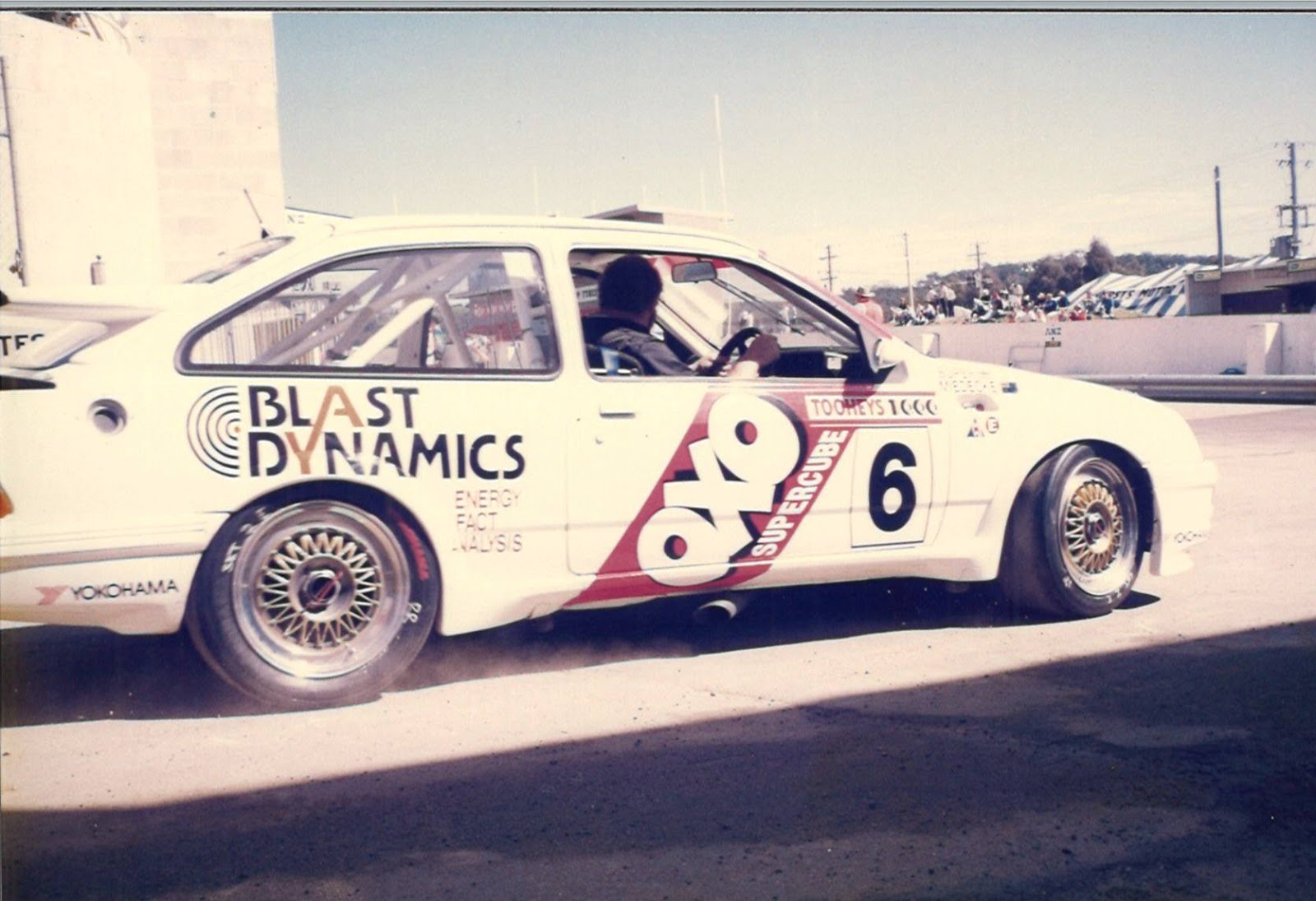
Chrysler is probably the best-remembered of the various third options that came along down the decades, so this'll probably be the least surprising entry on the list. I imagine a few are surprised I didn't go for the Charger: the VH E49, with the triple-carb engine and full Bathurst fuel tank that occupied the whole boot – that's the one everyone wants, right?
Not in my case, no. The Pacer was the John the Baptist of Chrysler's late-60s performance campaign, setting the buzz ahead of the Coming of the Charger – from the original VF, which was basically a four-door Plymouth Barracuda, to the VG, which debuted a potent new 250ci Hemi straight-six (though "Hemi" was just a badge in this case) with 138 kW on tap.
It was easy to knock the engine as primitive, having started out as Chrysler's "D"
engine intended for a variety of medium-sized trucks, but the crew at
Tonsley Park had sent the engine to finishing school and turned it into a fire-breathing monster. Then came the VH, which upped the capacity to 265ci and power to 162 kW at 4,800rpm, and torque to a stonking 380 Nm from 3,000. Chrysler test driver Ken Hartland said, "The Pacer would easily wind the speedo needle off the clock, it had power to burn! It was exciting to drive and very fast, probably too fast given the car's suspension and brakes..."
But then the Charger dropped, and the Pacer was abruptly forgotten, like a symphony in mid-crescendo. Only 1,800 VH Pacers were ever built, a wasted opportunity for Chrysler as it proved too hard for suburban dads to get the kids in and out of the back seat of the Charger. So I'll have the Pacer, thanks – all the power and vulgar styling of the Charger, but its thunder stolen, a forgotten hero.
1988 Nissan SVD Silhouette GTS
Yes, we made Skylines here, although in those days "Skyline" still meant a fairly ordinary compact family car. The base models of the seventh-gen R31 were fairly dreary, with wallflower styling and long overhangs front and rear, all very nothing-to-see-here. For Australia they wisely binned the HICAS four-wheel steering system, admittedly for reasons of cost more than because it wasn't working yet, and left a lot of other JDM toys on the shelf as well. To keep the project viable in the accounting department they also had to offer it with a four-cylinder engine as the Nissan Pintara, and were only able to make it a six-cylinder Skyline on top of that by using the same Nissan RB30E that Holden was already importing for the VL Commodore.
Absolutely none of that sounds appealing, does it? Well here comes the fun part – one of Nissan's employees in those days was a certain Howard Marsden, the former boss of Ford Special Vehicles in the glory days of the Phase III (although he gets rather more credit for that than he deserves, it was really predecessor Al Turner's car; the Phase IV was Marsden's baby, but we never got to see it in full flight). Marsden convinced the board to let him run another Special Vehicles Division, and so Nissan SVD took the warm Silhouette performance model and created the Silhouette GTS. The first one, based on the Series II facelift, was available only in Classic White and came with oil and transmission coolers, stainless steel extractors and a modified cam to lift power to 130 kW, plus upgraded suspension and brakes pinched from the JDM parts shelf. It was a solid-feeling car that sat planted through the corners, but it was still a bit tepid, so with the Series III facelift in October '88 they had another go and created the GTS-II. This time they added a piggy-back ECU to change the engine's fuelling, lifting power to 140 kW at 5,600rpm and torque to 270 Nm at 3,500, with a shorter diff to maximise the zoom up through the gears. This time it came in a much more extraverted Beacon Red, though personally I think I like the white one better – it's much more "Eighties" somehow. Only 200 of each were ever made, although a few extras left the factory with the juicy mechanicals fitted to less outspoken bodies – mostly supplied to various state police departments.
Now originally I was going with the GTS on the condition that we lift the engine out and replace it with the RB30ET from the VL Turbo, but now I'm not so sure. The turbo version of the RB30 was unique to Australia, as the Japanese wanted nothing to do with it, which adds some bonus Australian-ness... but on the other hand, fitting it means junking Marsden's carefully-fabricated extractor setup, just to go from 140 to 150 kW? You could play around with the boost, sure, but if you're going down that road there are so many other Nissan engines the tuners could recommend. So nah, on second thought I'll stick with the standard atmo engine. I know an understeering, underpowered four-door sedan mightn't sound like the ideal performance car, but remember not all of us have the talent of our Bathurst heroes. In the real world a car that swings around the corners flat and stable, giving plenty of warning of the approaching limit, with a responsive, howling six I can flog all day without ever worrying it'll break... yeah, that sounds about right. And it was made in Australia, using local and important ingredients!
Honourable Mention
1999 Mitsubushi TH Magna Executive
Mitsubishi never really had to create a hero model for the Magna – for most of its life, that role was adequately filled by the Starion or, later, the Lancer Evo. So for the first 15-odd years the base model could get by with a 2.6 or even a 2.4-litre four, a sentence so boring I can barely even type it without nodding off. Parallel to the Magna, however, they'd also been offering a premium version called the Verada, and since buyers in this bracket preferred not to sacrifice performance for luxury, it came with a bigger engine range to compensate for the extra weight.
And then, with the TH model in 1999, Mitsubishi axed the imported four entirely. Suddenly, even the base-model Magna Executive came with a 3.0-litre V6 as standard, with the big-brother 3.5 available as an option. An engine that offered 300 Nm of torque from 3,000rpm; an engine that was officially rated for 147 kW at 5,000rpm, but actually redlined above 6,000; an engine teamed with the familiar 5-speed manual gearbox, which was now available across the range.
Quite by accident, Mitsubishi had created a performance car that blended in with the traffic and was invisible to insurance companies. For slightly less than $32k, you could buy a car that matched anything rolling out of HSV or Tickford at the time:
Modern Motor wrote in some surprise, "At 15.76 [seconds], the Sports equals the new HSV XU-8's 400m sprint time." Yes, it was as fast as the latest overhyped HSV Commodore: up to 150km/h the two were neck-and-neck. Imagine the look on the
Haitch-Ess-Vee driver's face when they left the traffic lights and he was unable to pull away! And at just 1,416kg, the Executive was lighter than the Sports...
Really, the only reason it's not on the list proper is because I have to undermine my original premise by going for something more show-offy. The TH Executive had the urge, but it was from that 90's styling period of extreme understatement. It wasn't until the follow-up TJ model that the Magna got that distinctive "beak" in the radiator grille that made it stand out, and then they finally started sexing some models up with a nice wing and bodykit – personally I love the look of the VR-X (and think it would've looked even better zooming around Mount Panorama in Ralliart colours, but that's another story). But by then the Magna was gaining weight again, and the 0-100 times started dropping off, and the Sports started coming with an unnecessary all-wheel drive system, and the Magna Ralliart was just a contrived collectable, and, and...
All the elements just never quite came together in one vehicle, but the TH Executive is probably as close as we ever got. Buy one, and annoy the kids making late-night Maccas runs in their VTs, who wonder why their obese V8s can't leave this little shitbox behind already.
Edit: Halt that! A mate of mine, He Whose Spanners I Am Not Fit To Rearrange, tells me he's never yet seen a Magna that doesn't eat its piston rings like moly McNuggets. So if you choose to buy one go in with your eyes open, and understand there are only two kinds of Magna – those that blow blue smoke, and those that are going to blow blue smoke. The second that exhaust plume becomes even slightly visible, flip it to a greater idiot before you have to stump up for a $6,000+ ring replacement. Phew, lucky I didn't include it in the list proper, huh?
...And One I Wouldn't:
2000 Toyota XX10 Avalon
Sometimes I think this only came about because the executives were embarrassed. At some point they realised it looked bad to fill Toyota's head office car park with E-Classes and 7-Serieses, so a panicked call went out for Toyota to make something in the executive sedan class, stat!
Now just to be clear, I've got nothing bad to say about the follow-up model, the Aurion. My brother has one and it's great: plenty of power, surprisingly efficient for a 3.5-litre V6, comfortable and extremely reliable – despite being "very negligent" with the servicing, it's made it to 250,000km without any issues whatsoever (although it must be said, as a former Toyota mechanic his idea of being "very negligent" might be different from mine). There was even a supercharged TRD version, which goes hard but has a torque steer problem, so make up your own mind there.
No, the problem was with the Avalon, which had no redeeming features whatsoever. Even the way it landed on our shores reeked of "meh," with Toyota transferring the tooling to the local branch in 1999. It was a fine example of the
muda principle, or "eliminate waste," an aspect of the Toyota Way, but it did leave them pitching a model from 1994 against ever-more-aggressive offerings from Munich and Stuttgart. There was nothing really wrong with it, but that was part of the problem, because there was nothing really right with it either – it was boring then, and because Toyotas last forever, they're still boring now. The Avalon just had the misfortune to occupy a place on the Venn diagram that didn't overlap, aimed at plush, upmarket sedan buyers who never went anywhere near a Toyota dealership. Toyota's customers were commercial fleet buyers, and the very few after a family sedan were spendthrifts who knew they might as well save themselves about $20k and buy the Camry.
But to me the Avalon's true crime was being advertised by
Sir Les Patterson, one of the lesser creations of Barry "Oh, You Mean The Bloke Who Plays Dame Edna?" Humphries. Whenever the question of an "Australian Trump" is raised by my lefty friends, my mind always conjures up the image of Sir Les. Also, the tagline was a
pun-ishing "Avalon drive and you'll never turn back!" which is never far from my mind because I live not far from the village of Adelong. Past tense, it becomes, "Adelong drive and couldn't remember it after." So no, I'd rather make tender perfumed love to a bucket of broken glass than own an Avalon, but at least all those Toyota executives finally had something nice to drive home in.
So what have I forgotten? Criticisms? Outbursts? The comment box is below. Otherwise, have a Merry Christmas, a Happy Hanukkah, a safe and prosperous whichever-solstice-is-appropriate-to-your-hemisphere, and a great New Year. Bye for now.